
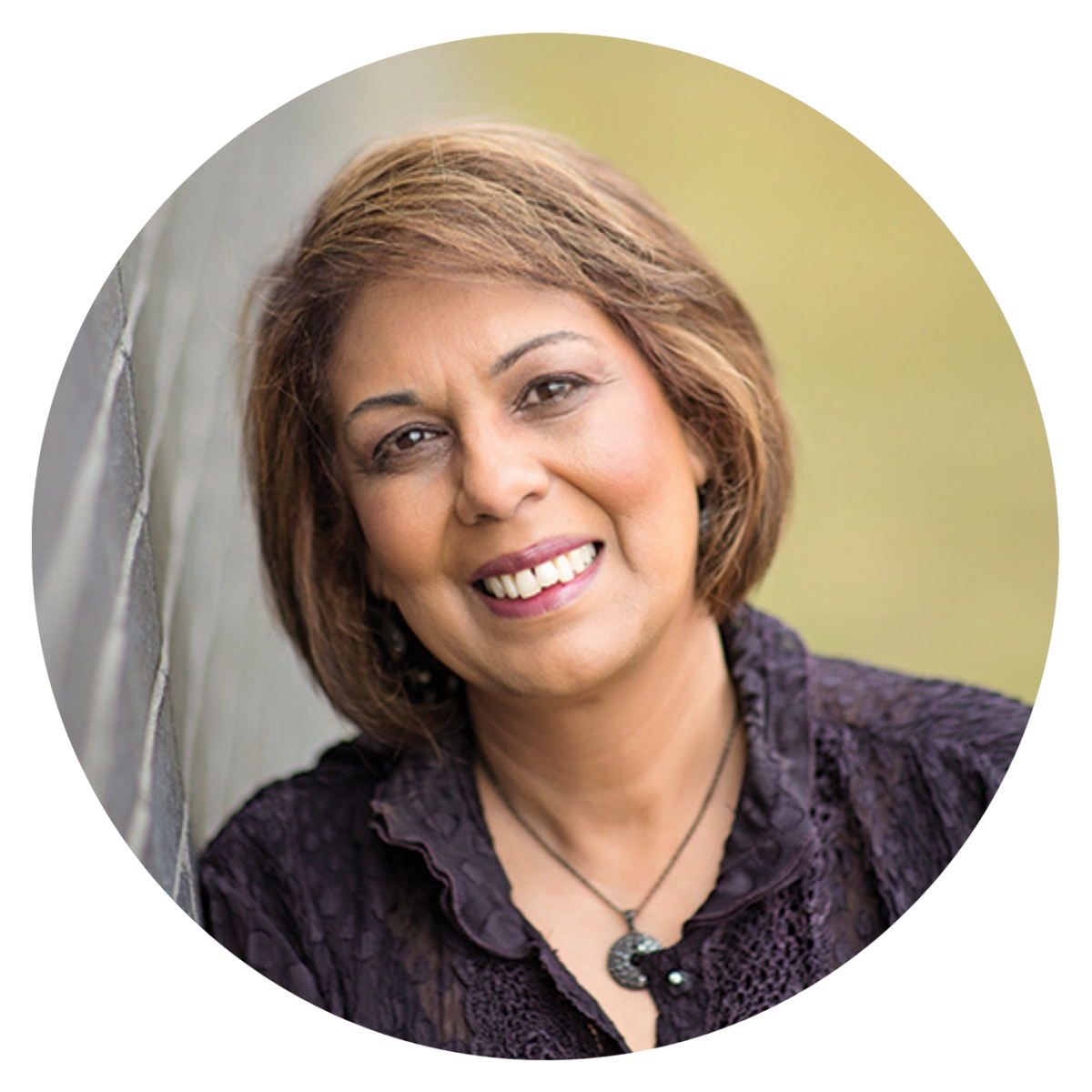
Dr. Samim Hasham
PharmD, MMngt, BSc. Pharm (Hons)
What first inspired you to pursue a career in pharmacy?
I was drawn to pharmacy because it sits at the intersection of science, trust, and service. Early in my training at Robert Gordon University, I recognized that pharmacists are uniquely positioned to translate complex medical knowledge into practical decisions that directly affect people’s lives — but what moved me most was witnessing how a single medication conversation could change a patient’s trajectory entirely. That realization ignited a commitment that has now spanned over 40 years: combining clinical precision with public health impact, supporting medication safety at the individual level while influencing the broader systems of care that determine whether people thrive or fall through the cracks.
What does leadership mean to you in the context of pharmacy?
To me, leadership in pharmacy means helping the profession grow while staying grounded in patient care — and making sure that growth is inclusive. Pharmacists are uniquely positioned to bridge clinical care, health systems, and community needs, and leadership means actively creating space for diverse voices and perspectives to be recognized within that work. Throughout my career, this has looked different depending on the context: supporting learners across Toronto Metropolitan University, McMaster, and the University of Toronto; advancing medication safety policy through Health Quality Ontario; helping community agencies align with Accreditation Canada standards to strengthen governance and quality of care; co-chairing the Human Services and Justice Coordinating Committee on complex social and health issues; and now exploring how artificial intelligence can be responsibly integrated into healthcare. I have also tried to lead by example — as a woman of colour in spaces where that representation has not always been the norm — because pharmacy becomes stronger when the people leading it reflect the communities we serve.
What’s one belief you hold about pharmacy that more people should adopt?
Pharmacists are not just medication experts — we are systems thinkers, innovators, and emerging leaders in arenas most people don’t associate with our profession yet. Our training equips us to improve care pathways, strengthen governance, advance digital health, and contribute to frontiers such as AI pharmacy and space health — a field I am actively exploring through collaboration with pharmacists, researchers, and students interested in medication management in extreme environments. When pharmacists step confidently into research, policy, technology, and interdisciplinary leadership, the profession expands in ways that strengthen healthcare at every level — and at every frontier. We owe it to the public to keep pushing those boundaries.
How are you adapting to changes in the profession?
I view change as an opportunity to expand pharmacy’s influence — and I have always believed that staying relevant means never stopping learning. Pursuing my PharmD at the University of Colorado after decades in practice, completing a Masters in Health Leadership at McGill, earning my Certified Diabetes Educator designation, and most recently completing HarvardX training on AI in Healthcare and contributing to the WHO Europe Knowledge Community on Responsible AI for Health — each was a deliberate choice to grow beyond where I already was. That same mindset drove my work at CMHA Peel, where I helped conceptualize and launch Rapid Access Addiction Medicine (RAAM) clinics, formalize integrated care pathways for opioid addiction services, and deploy the TELUS Mobile Van to bring primary and addiction care directly to marginalized communities. I have also embraced global leadership through the Brain and Mind Institute, Aga Khan University, working across low- and middle-income countries to advance community-based mental health programs. Adapting is not a reaction — it is a practice, and one I have tried to model throughout my career.
What’s something you wish you knew earlier in your career?
I wish I had known earlier that pharmacy is a profession where you do not have to wait for permission to grow — and that pharmacy’s value is not always obvious, it has to be clearly articulated and advocated for. Early in my career I assumed that doing good work would speak for itself, and that there was a clearer path to follow. Neither turned out to be entirely true. The most meaningful opportunities came from stepping into spaces where pharmacists were not traditionally present — from community pharmacy ownership, to academic teaching, to global health leadership — and learning to speak the language of leadership and systems, while staying grounded in clinical practice and why I started. The pharmacists who expand the profession are those willing to explain their impact in the rooms where decisions are made. I would tell every new pharmacist: your scope is often shaped by how willing you are to claim it, and you do not need permission to begin.
Outside of pharmacy, what fills your cup?
Outside of pharmacy, what fills my cup most is community and connection. Volunteering has been a constant throughout my life — most recently as National Chair of the World Partnership Walk, the first woman to hold that role in the organization’s over 40-year history, an experience that has deepened my commitment to global health equity and reminded me how much can be accomplished when people come together around shared purpose. Closer to home, serving as Co-Chair of the Human Services and Justice Coordinating Committee — where healthcare, social services, and justice partners collaborate on complex issues including the opioid crisis — has been profoundly meaningful. Being recognized as a Senior Fellow at Massey College, University of Toronto, for contributions to community pharmacy, mental health, and the opioid epidemic, was both humbling and motivating. Beyond service, I find renewal in quieter things: watercolor painting, reading, traveling, and learning how people live and care for one another in different parts of the world. These experiences keep me grounded and remind me, consistently, why the work matters.
What legacy do you hope to leave in the profession?
I hope to be remembered as someone who consistently asked, who is being left out? — and then tried to do something about it. Whether through medication safety work, four decades of educating and opening doors for learners, global health initiatives, or helping shape how artificial intelligence can be used responsibly in healthcare, the thread has always been equity and possibility. I hope my legacy will be helping pharmacy expand its sense of what is possible and who we are responsible to — not only the patients in front of us, but the ones we have not yet found a way to reach. If I have helped pharmacists see a wider horizon, strengthened the profession’s voice in rooms where it was needed, and shown that this work belongs to everyone willing to claim it, that would be a legacy I would be proud to leave. And I hope those I have worked with will carry that question forward long after I do.
What does being an OPA member mean to you?
Being an OPA member represents professional solidarity, shared advocacy, and a collective commitment to advancing pharmacy in Ontario. OPA has been a consistent presence throughout my entire career — I have been a member since 1985, from early professional development certifications to ongoing engagement in provincial policy discussions, including the OPA Conference Planning Committee and the various Educator programs. It strengthens the voice of pharmacists where it matters most, champions excellence across diverse practice settings, and reminds us that we are stronger together. For me, membership is both a responsibility and a privilege — and a reaffirmation that the work we do as pharmacists is worth fighting for.
We are always thrilled to hear about our member stories, if you’d like to be featured or want to feature a colleague, please contact [email protected].